A number of posts from Jenny Mackness, Bon Stewart, and Paul Prinsloo caught my attention this week. All three deal with loss of their individual blogging voices. By accident, I read them in reverse-order, but the series was started by Prinsloo, self-described as "an education consultant and researcher at the University of South Africa (Unisa), an African mega open distance learning (ODL) higher education institution." As was the case with Bon Stewart, Prinsloo was a new voice for me, so it was somewhat ironic that I found his voice as he was losing it.
In his post Being tongue-tied and speechless in higher education: implications for notions of (il)literacy #metaliteracy, Prinsloo eloquently describes his precipitous loss of voice, so that after an extended period of prolific blogging, "Suddenly I have become illiterate (a point to which I will return later), in a world I did not understand anymore." He looks for reasons for his aphasia (problems with any or all of the following: speaking, listening, reading, and writing.), but "there is nothing specific that comes to mind. Not only do I suspect that there are many possible reasons, but the reasons are also interconnected, interdependent and layered." He concludes his fine post by wondering if many our students are also "tongue-tied and speechless, but not illiterate?"
Through a happy Twitter-enabled chance, Stewart picked up on Prisloo's post, and it resonated with her. She, too, had fallen away from blogging, sensing a loss of voice, and as had Prinsloo, she looked for explanations: "My silence hasn’t been mainly personal, though: rather, it stems from same uncertainty of speech writ large and broad; a pervasive, sinking sense of not knowing the contexts into which I speak and write and share my ideas."
Mackness suggests in her sympathetic reading of Stewart that perhaps she is frozen by a sense of conscious incompetence, or a sense that one is unable to perform competently in some arena. This was actually the first post of the series that I read, and I was intrigued enough to follow the discussion back through Stewart to Prinsloo. I am interested in this loss of voice as I have experienced it myself and in my students. I teach writing, and the "tongue-tied and speechless, but not illiterate" condition that Prinsloo describes is familiar. In a follow-up post, Mackness recommends advice from Jack Kerouac and Stephen Downes to keep moving forward, keep the fingers moving, and almost by magic the ideas will start moving again. The written voice will emerge from the moving fingers. Perhaps. I do use free-writing exercises with my students, but I can't say that they always work.
Several things occur to me about this exchange. First, all of these people are accomplished, polished writers. If they can suffer a loss of voice, then I can understand even better that my students who are not polished writers can also suffer a loss of voice, or not become confident enough to develop a voice in the first place. Public writing of most any kind means putting oneself out there. It means exposing oneself to possible ridicule and attack, embarassment and injury. This can be most threatening to beginning writers who have not become competent with language, but it can also be threatening to experienced writers who find themselves in a conversation about which they know relatively little or in a conversation with others who have much more power than they do. I do NOT think this is the case with these blog writers, but it is definitely the case with most of my students. Not only are they unsure of their command of written English, but in school they are forced to write to advanced experts, their teachers, about topics, the teachers' topics, that the students have not yet mastered. This is an awful situation, and probably the only sane thing to do is to plagiarize some expert just as we all once plagiarized our parents' political and social views in grade school.
But as I said, I don't think these writers are suffering from a sense of conscious incompetence. They know they can write, and they know that they have some useful knowledge to share. They also know that in any given conversation, they may encounter someone more knowledgeable or more mellifluous. In this case, silence is the intelligent response, or at most, some probing questions. I studied with Isaac Bashevis Singer at the University of Miami, and it was clear from our first meeting that I would never know as much about writing as he nor would I ever be able to say what I did know as well as he. So mostly I was quiet, save when I had an intelligent question. Singer was kind enough to treat all my questions as intelligent. I'm currently reading Michel Serres, and again, I'm mostly silent, making few pronouncements about the text, mostly asking questions. Serres knows more than I do about his issues, and he says it better. We have all been annoyed by those who were too bold and too dense to know when to be quiet.
But again, I don't think these writers are cowering before the collected brilliance and insight of the Internet. They are all experienced net writers, and they know that everyone is always more brilliant than anyone (e.e. cummings would be most proud), but they also know that it takes the voices of all the anyones to make up the voice of everyone. I think that their loss of voice stems from other causes.
I think that they may be overlooking fatigue. Sometimes, I'm just too damned tired to talk. Stewart notes that she is currently in a doctoral program, and like the rest of us, she likely has a range of other social, familial, and employment obligations that each take up half of her time. The trouble is, of course, that the Net is never too damned tired to talk. It is incessant, and no one can keep up with it. Burnout is real for me, so I think it might be real for them, and sometimes, the only intelligent response to burnout is silence.
But I think that Stewart points at a more potent reason for loss of voice when she says that she has "a pervasive, sinking sense of not knowing the contexts into which I speak and write and share my ideas. … Over the last year – particularly the more I followed and unpacked the hype cycle of MOOCs – the more I felt like I no longer recognize the story of education as it gets told. Or enacted in policy and curriculum design. Or reported in the news. I have been silent because I no longer felt like I knew how to talk about any of it." I think Stewart is spot on here. She has not moved; rather, the conversation has moved, and she's no longer certain that she wants to be part of it. It's as if she were singing in a choir that suddenly and unexpectedly shifts keys to C and she's still singing in B. As would any intelligent, sensitive person, she quits singing until she can reorient herself, and she doesn't rejoin the singing until she decides that the key of C works for her.
I, too, joined early the conversation about MOOCs, mostly because I found MOOCs so engaging and inspiring, but also like Stewart, I lately find the conversation shifting to a different key, one not suited to my vocal range. I may write a post about that shift, now that Stewart has pointed to it, but I'm not sure that I have the interest to think about it. More likely, I will continue to think about MOOCs in ways that make sense to me, and trust that enough others will engage in that conversation. If they don't, then I will eventually quit talking about MOOCs, I suppose.
I think this shift in conversation is familiar to most of us, certainly in our social contexts. I think we've all been in a good conversation at a party or other gathering when the conversation shifts gears and becomes less interesting to us. Maybe new people join the conversation, and all of a sudden, the tone changes. It's time to get a drink or go to the john.
It's unfortunate that this shift in conversation can have such an adverse affect on the best of writers. The change in a conversation can make us feel as if our loss of voice is somehow our fault—after all, lots of other people still seem to have lots to talk about in this conversation—but I don't think it is our fault. Rather, our silence is a reasonable response to the new conversation that has emerged. The key response to such a situation is to disengage in silence (shouting usually does no good), and find or create another conversation. Engaged and sensitive writers such as Prinsloo, Stewart, and Mackness will always find an engaged and sensitive audience, I think.
Finally, I want to point out that all of these writers were able to write through their loss of voice, despite their loss of voice. It illustrates the advice I give my students when they say they have nothing to say: I tell them to write just that and to keep writing it until they write something else. Writing about not writing is a great way to kickstart your writing and find your voice. I have a bit of respect for silence. The long, slow writing that Mackness refers to can include long, slow stretches of silence. At least for me, and I'm good with that.
Showing posts with label writing. Show all posts
Showing posts with label writing. Show all posts
Saturday, October 26, 2013

Thursday, October 25, 2012
WAC 2: The Rhizomatic Document
It occurs to me that some people may not agree with my characterization of writing, especially in the sense of an actual text or document, as a network phenomenon. After all, scholars have long emphasized the linear nature of printed documents, such as books, typed letters, and journal articles. Electronic documents such as this post have introduced hyperlinks, which so impressed scholars at the beginning of the Internet age, but for these scholars, the novelty of hyperlinks is that they in some way disrupt the inherent, natural linearity of documents. I think this linear view of documents is wrong. Documents have always been network phenomenon, but that fact has been obscured by the mechanical technology we used to produce them and by the lack of electronic technology to see them otherwise. While it's obvious that words in a document are arranged in a line, this line is better visualized as a curving line of genes in DNA: the starting point for an unfolding in complex network fashion into a very, non-linear organism. The words in this post are not individual bricks added one by one to build a wall between you and me for you to analyze or not. Rather, the words in this post are a set of instructions keenly sensitive to their interconnectivity to the other words and to the particular arrangement among all the words to create multi-scale, dynamic patterns that may or may not echo in you.
To my mind, the linear view of writing is part and parcel of the general linear view of reality that has been key to Western intellectual thought for the past few centuries. While the reductionist, linear methods of Western science have been wildly successful in many ways, the development of chaos and complexity theories has done much to expose the limitations of reductionist linearity as a worldview. The old linear views were based on well-established linear mathematics and linear arguments. It was very mechanical, as was much of the technology that supported such thinking. It is easy to see how someone who makes a living out of setting metal type would tend to see a document as a linear structure. But as Gleick shows in his book Chaos, the non-linear mathematics of chaos theory has revealed the limitations of linear mathematics and, by bold extension, the limitations of a linear, reductionist world view. Edgar Morin's book On Complexity shows how complexity theory—which to my mind is subsuming chaos theory, but that may be because I don't understand either well enough—how complexity theory is likewise exposing the limitations of the reductionist, linear worldview. As Albert-lázló Barabási notes: "we always lived in a connected world, except we were not so much aware of it," mostly because we didn't have the technology to see it. Now we have that technology and the concomitant patterns of mind to see that the Universe is so much more than a reductionist, linear mechanism. It's time to turn this complex networking lens on writing.
And we are turning the network lens on writing, even when we don't recognize it as such. I read just yesterday an article in The Atlantic by Peg Tyre entitled The Writing Revolution, in which Ms. Tyre describes how Principal Deirdre DeAngelis turned around her failing New York high school, New Dorp, by implementing a writing across the curriculum program that placed "an overwhelming focus on teaching the basics of analytic writing, every day, in virtually every class." The result was "an extraordinary blossoming of student potential, across nearly every subject—one that has made New Dorp a model for educational reform." Unfortunately, the article seems to cast this most fortunate development in a return to basics narrative, pitting old-fashioned instructional methods against misguided, New-age methods:
Writing is not just a sea of words. It is not simply stringing along a sequence of words, brick by brick, even in grammatically correct ways, until one reaches 500 words, which is what most of my students seem to think writing is. Rather, writing is a mapping of words that interconnect and relate to each other and to neural networks, social, and physical networks in significant ways. The sequence of words, the proximity of words to other words, the frequency of words, and the repetition of words unfolds the meanings of words, and naive readers and writers miss these dynamic and critical inter-relationships. Naive readers and writers see just a wall of bricks—one word following another in a line. They do not see the unfolding of a sequence of words in a meaningful orchestration of networked patterns. In other words, they do not see the unfolding of a sequence of genes in a strand of DNA that eventually blossoms into a kitten, which in my experience is a most non-linear, chaotic, complex structure, certainly as complex as any James Joyce novel.
Tyre actually captures this network thinking when she quotes Arthur Applebee, the director of the Center on English Learning and Achievement at the University at Albany: “Writing as a way to study, to learn, or to construct new knowledge or generate new networks of understanding [italics added] … has become increasingly rare.” Applebee is correct, I think, and the solution is a rhizomatic program of writing across the curriculum which provides students numerous, persistent, and ubiquitous opportunities to use writing and reading documents as tools for learning. As with any beginners, these opportunities can begin small, just as Tyre describes happened at New Dorp:
To my mind, the linear view of writing is part and parcel of the general linear view of reality that has been key to Western intellectual thought for the past few centuries. While the reductionist, linear methods of Western science have been wildly successful in many ways, the development of chaos and complexity theories has done much to expose the limitations of reductionist linearity as a worldview. The old linear views were based on well-established linear mathematics and linear arguments. It was very mechanical, as was much of the technology that supported such thinking. It is easy to see how someone who makes a living out of setting metal type would tend to see a document as a linear structure. But as Gleick shows in his book Chaos, the non-linear mathematics of chaos theory has revealed the limitations of linear mathematics and, by bold extension, the limitations of a linear, reductionist world view. Edgar Morin's book On Complexity shows how complexity theory—which to my mind is subsuming chaos theory, but that may be because I don't understand either well enough—how complexity theory is likewise exposing the limitations of the reductionist, linear worldview. As Albert-lázló Barabási notes: "we always lived in a connected world, except we were not so much aware of it," mostly because we didn't have the technology to see it. Now we have that technology and the concomitant patterns of mind to see that the Universe is so much more than a reductionist, linear mechanism. It's time to turn this complex networking lens on writing.
And we are turning the network lens on writing, even when we don't recognize it as such. I read just yesterday an article in The Atlantic by Peg Tyre entitled The Writing Revolution, in which Ms. Tyre describes how Principal Deirdre DeAngelis turned around her failing New York high school, New Dorp, by implementing a writing across the curriculum program that placed "an overwhelming focus on teaching the basics of analytic writing, every day, in virtually every class." The result was "an extraordinary blossoming of student potential, across nearly every subject—one that has made New Dorp a model for educational reform." Unfortunately, the article seems to cast this most fortunate development in a return to basics narrative, pitting old-fashioned instructional methods against misguided, New-age methods:
In a profoundly hopeful irony, New Dorp’s reemergence as a viable institution has hinged not on a radical new innovation but on an old idea done better. The school’s success suggests that perhaps certain instructional fundamentals—fundamentals that schools have devalued or forgotten—need to be rediscovered, updated, and reintroduced. And if that can be done correctly, traditional instruction delivered by the teachers already in classrooms may turn out to be the most powerful lever we have for improving school performance after all.This is certainly one way to view the New Dorp saga, but not the only way. I prefer to look at New Dorp's story as a success of network thinking. To my mind, New Dorp discovered that its students did not know how to use language to map a complex network of ideas. As one New Dorp teacher noted: "the best-written paragraphs contained complex sentences that relied on dependent clauses like although and despite, which signal a shifting idea within the same sentence," but the 14- and 15-year olds at New Dorp "were missing a crucial understanding of how language works." The students could not generate useful knowledge networks in their minds when they were reading, nor could they generate useful knowledge networks on paper when they were writing, because they did not understand the grammatical and syntactical connectors and connections which arrange words into meaningful patterns. As one student said of her own skills: "I could read, sure. But it was like a sea of words … The more writing instruction I got, the more I understood which words were important.”
Writing is not just a sea of words. It is not simply stringing along a sequence of words, brick by brick, even in grammatically correct ways, until one reaches 500 words, which is what most of my students seem to think writing is. Rather, writing is a mapping of words that interconnect and relate to each other and to neural networks, social, and physical networks in significant ways. The sequence of words, the proximity of words to other words, the frequency of words, and the repetition of words unfolds the meanings of words, and naive readers and writers miss these dynamic and critical inter-relationships. Naive readers and writers see just a wall of bricks—one word following another in a line. They do not see the unfolding of a sequence of words in a meaningful orchestration of networked patterns. In other words, they do not see the unfolding of a sequence of genes in a strand of DNA that eventually blossoms into a kitten, which in my experience is a most non-linear, chaotic, complex structure, certainly as complex as any James Joyce novel.
Tyre actually captures this network thinking when she quotes Arthur Applebee, the director of the Center on English Learning and Achievement at the University at Albany: “Writing as a way to study, to learn, or to construct new knowledge or generate new networks of understanding [italics added] … has become increasingly rare.” Applebee is correct, I think, and the solution is a rhizomatic program of writing across the curriculum which provides students numerous, persistent, and ubiquitous opportunities to use writing and reading documents as tools for learning. As with any beginners, these opportunities can begin small, just as Tyre describes happened at New Dorp:
In chemistry class in the winter of 2010, [student] Monica DiBella’s lesson on the properties of hydrogen and oxygen was followed by a worksheet that required her to describe the elements with subordinating clauses—for instance, she had to begin one sentence with the word although.
Although … “hydrogen is explosive and oxygen supports combustion,” Monica wrote, “a compound of them puts out fires.”
Unless … “hydrogen and oxygen form a compound, they are explosive and dangerous.”
If … This was a hard one. Finally, she figured out a way to finish the sentence. If … “hydrogen and oxygen form a compound, they lose their original properties of being explosive and supporting combustion.”This is not the old drill-and-practice and diagramming sentences characteristic of back-to-basics grammar and writing. Rather, this is using writing to map the complex relationships among chemistry concepts. Yes, it begins small, at the sentence level with precise prompts. That's fine. This provides the scaffolding for Monica to begin to construct paragraphs with even more complex networks of ideas, and this helps Monica to become a better writer and a better chemistry student. That sounds like a win-win to me.
Tuesday, October 23, 2012
WAC: Writing to Learn across the Curriculum
I have the opportunity to design a new writing across the curriculum program for college, and I'm interested to see how I might translate theory into practice. I have been writing for three years now about networking, connectivism, and rhizomatic education, but it has all been rather abstract. So let's see what practice might look like.
Let's start with a statement about writing: writing is a network phenomenon. Writing's first job is to engage, develop, and render explicit internal, neural networks. As Olaf Sporns says, and as I have quoted often enough, "Cognition is a network phenomenon" (Networks of the Brain, 181). Writing is the networking tool that helps me to verbalize my cognition. It helps me to reinforce and reform my cognition. Writing is one of the best tools we have for cultivating thought and translating it into a text that helps the writer to clarify for herself what she means. This is the primary mode of writing that I am using in this blog. I am writing first for myself to explore my thoughts, mostly about networking, connectivism, and rhizomatic structures. I don't mean to insult any who might read this blog—indeed, many have made comments that have greatly helped me to clarify my thinking—but this blog is where I do my thinking and learning. I'm really my own first reader here, and I'm writing this blog first for my learning.
As a tool for learning, writing works in two different directions. First, writing works from the inside out. Writing helps me to engage, shape, and map my thoughts in a recursive probing that I can follow and remember. Writing helps me to make what I know explicit to myself, and that is of inestimable value to me. Once my thoughts are explicit, once they are mapped to a text, then I can interact with them more objectively and systematically than I can if they are just floating about in my head. I can keep my thoughts, remember them, much better and more reliably if they are mapped to words in a document than if I just keep them in my head. I do not mean to denigrate purely mental thought—often I think things through long before I put them in text, and I am aware that much cognition is not even available to the conscious, rational mind—but I want to speak for the added benefits of writing as a supplement to cognition. Writing affords me a conscious engagement with my thoughts that is difficult to get any other way. (This recursive dynamic between the external textual network and the internal neural network is worth much more investigation than I am giving it here, but that's for later.)
Thus as a learning tool, writing works first from the inside out, but it also works from the outside in. As I have experiences—most often through constant reading and conversation with others, but pretty sunsets are also included—I use writing to develop new knowledge networks and to engage my existing networks in different ways. This allows new knowledge to bloom in my mind, and writing about those experiences is a physical process that reinforces and cultivates those new mental blooms in ways that few other activities can do.
In short, writing is a very complex and wonderfully malleable boundary between the networks of knowledge in my mind and the networks of knowledge outside my mind. Writing is one of the key boundaries where knowledge leaks out of me and oozes into me. Writing is like a cell membrane, or the mechanism within the membrane that manages the exchange between the inside and the outside of the organism. It is a zone of engagement. As a tool for building and traversing knowledge networks, writing is one of the best technologies that humanity has invented. Writing makes me smarter and more knowledgeable than I am without writing. I think writing has this benefit for everyone, and I am convinced that the more students write about the things they are learning, the better they will learn those things.
Let's start with a statement about writing: writing is a network phenomenon. Writing's first job is to engage, develop, and render explicit internal, neural networks. As Olaf Sporns says, and as I have quoted often enough, "Cognition is a network phenomenon" (Networks of the Brain, 181). Writing is the networking tool that helps me to verbalize my cognition. It helps me to reinforce and reform my cognition. Writing is one of the best tools we have for cultivating thought and translating it into a text that helps the writer to clarify for herself what she means. This is the primary mode of writing that I am using in this blog. I am writing first for myself to explore my thoughts, mostly about networking, connectivism, and rhizomatic structures. I don't mean to insult any who might read this blog—indeed, many have made comments that have greatly helped me to clarify my thinking—but this blog is where I do my thinking and learning. I'm really my own first reader here, and I'm writing this blog first for my learning.
As a tool for learning, writing works in two different directions. First, writing works from the inside out. Writing helps me to engage, shape, and map my thoughts in a recursive probing that I can follow and remember. Writing helps me to make what I know explicit to myself, and that is of inestimable value to me. Once my thoughts are explicit, once they are mapped to a text, then I can interact with them more objectively and systematically than I can if they are just floating about in my head. I can keep my thoughts, remember them, much better and more reliably if they are mapped to words in a document than if I just keep them in my head. I do not mean to denigrate purely mental thought—often I think things through long before I put them in text, and I am aware that much cognition is not even available to the conscious, rational mind—but I want to speak for the added benefits of writing as a supplement to cognition. Writing affords me a conscious engagement with my thoughts that is difficult to get any other way. (This recursive dynamic between the external textual network and the internal neural network is worth much more investigation than I am giving it here, but that's for later.)
Thus as a learning tool, writing works first from the inside out, but it also works from the outside in. As I have experiences—most often through constant reading and conversation with others, but pretty sunsets are also included—I use writing to develop new knowledge networks and to engage my existing networks in different ways. This allows new knowledge to bloom in my mind, and writing about those experiences is a physical process that reinforces and cultivates those new mental blooms in ways that few other activities can do.
In short, writing is a very complex and wonderfully malleable boundary between the networks of knowledge in my mind and the networks of knowledge outside my mind. Writing is one of the key boundaries where knowledge leaks out of me and oozes into me. Writing is like a cell membrane, or the mechanism within the membrane that manages the exchange between the inside and the outside of the organism. It is a zone of engagement. As a tool for building and traversing knowledge networks, writing is one of the best technologies that humanity has invented. Writing makes me smarter and more knowledgeable than I am without writing. I think writing has this benefit for everyone, and I am convinced that the more students write about the things they are learning, the better they will learn those things.
ASIDE: The cell membrane analogy for knowledge exchange is problematic. It suggests too physical an activity. Actually, I don't think there is any physical exchange when I push knowledge into the world or the world pushes knowledge into me. There is no token, no chunk of knowledge, that is passed from you to me and back. Rather, there is an echo of patterns from you to me and back. This is much more like Deleuze and Guattari's concept of decalcomania, in which a pattern in one part of the rhizome (you) is echoed in another part (me) as we encounter each other either physically or via some media such as this blog post. Thus, this echo always happens at some boundary, or some pressing of one structure against another. A text is just such a boundary, or pressing, or zone of engagement. As James Gleick describes so well in his book Chaos: Making a New Science (2008), this boundary is where all the action takes place between or among structures. The boundary is where each structure (my mind and your mind, say) begins to vibrate under the presence of the other, and pattern in the one begins to echo in the other. This echoing of pattern has a definite physical ground, but the physical substrate is not sufficient to explain it.Anyway, if I am thinking correctly, then the first goal for a writing across the curriculum program should be to enable students to learn more and better. Writing helps students to make better sense of the knowledge networks in their own minds, and it helps to feed those networks with new knowledge from outside.
Wednesday, February 1, 2012
#cck12 - A Connected Classroom
I'm finding it quite easy to frame most of what I do in my writing classes with rhizomatic/connectivist thinking. I work hard to connect students to someone other than to me. I begin class by asking my students to take out their cell phones and text someone about what they are doing at the moment: learning how to write. This is a bit theatrical as most of the students think at first that I will demand that they turn off their cell phones. They are shocked but pleased to learn that this class will encourage cell phone usage. We then read the responses aloud, which almost always provides some merriment. This exercise immediately lets them know several things about the class:
- connectivity is paramount in the class.
- the class will connect beyond the confines of the classroom.
- the class will utilize whatever tool is convenient and productive for writing.
- the teacher may not be the center of the class universe.
- writing is quite likely not what they thought it was.
- we will find ways to have fun.
The ludic element should not be overlooked. Research shows that few things work better than fun and play for connecting people with each other and with a new endeavor. Rhizomatic connectivists must have a shtick and a game. By the way, one cannot read Deleuze and Guattari without being struck by the theatrical, ludic quality of their writing. If you aren't laughing through A Thousand Plateaus or Anti-Oedipus, then you're missing the point.
I then ask my students how many of them consider themselves writers. Usually, only a handful raise their hands. I then ask them how often they text each day. They all text a lot. I then insist that they are all writers, and usually, they protest that texting is not writing. This allows us to discuss writing, with me trying to convince them that their generation is generating more writing by more people than any other generation in history. I'm not sure how many of them are convinced, but it does serve them notice that they are not in a traditional college class, much less a traditional writing class. They sense that something is afoot, and by this time, most of them are alert. I like this.
I then have them introduce each other to the class, but only after they interview each other and take notes (more writing and connecting, but they don't usually think of it as writing or connecting). They have to learn the single most interesting thing they can about the other person that can be publicly shared. Both the interviews and the introductions are usually great fun, and after the introductions, I lead them in a discussion of writing as a tool for learning and for remembering. I again ask them how many make notes and lists for themselves or take notes in class. Most all of them do, so I submit that as further evidence that they are already writers. Usually by this time, many are beginning to warm to the idea. I ask how many enjoyed the interview, and most do. So I ask again if they enjoy writing. Not so many raise their hands this time.
I conclude the class by giving them my Gmail address and asking them to send me a Gmail identifying their Google account so that I can send them the link to the Google Sites class wiki, where the syllabus is housed.
So I devote the entire first day connecting the students to each other, to someone outside the class, to writing as they already use it, and finally to me and to the course apparatus, which obviously relies a great deal on Google. I find the Google tools much less restrictive and far more open to connectivity than the school's LMS.
Of course, next term I may use completely different activities, but the point will likely remain the same: foster connectivity that centers about the class proper, but encourages connectivity beyond the class.
Tuesday, October 18, 2011
Writing as Network Enterprise
Manuel Castells' book The Rise of the Network Society continues to inform my understanding of a Connectivist rhetoric, though my reading has been incredibly slow over the past month or two. I've had way too many distractions.
Anyway, Castells' discussion of the emergence of the network enterprise has clarified my understanding of the socio-linguistic ecosystem that informs writing. Castells defines the network enterprise as that specific form of enterprise whose system of means is constituted by the intersection of segments of autonomous systems of goals (187). I understand him to mean that a networked enterprise (he is speaking almost exclusively of business organizations) organizes itself and conducts its business through various segments of autonomous networks that are available to the enterprise but not owned or controlled by the enterprise.
At first glance, this may not seem like much of an insight. Haven't organizations always used autonomous networks such as highways, waterways, airways, mail systems, and so forth to do their business? They have, but something has shifted in the past few decades. The biggest shift is, of course, the emergence of the Internet – the distribution of millions of interconnected computers. The Internet provides a new, highly capable, very flexible, and autonomous substrate that allows organizations of any kind or purpose to organize themselves on most any scale and to interconnect in most any way with markets: researchers, suppliers, producers, transporters, customers, regulators, and information.
The Internet also makes explicit to most everyone exposed to it the networked structure of human interaction. Transportation systems and postal systems were also networked structures, also mostly autonomous of any one business enterprise, but for whatever reason, those networks lacked the visual or emotional impact to knock most people from their focus on the individual, at least in Western culture. We could continue to think of Microsoft as mostly Bill Gates, WalMart as Sam Walton, and the United States as JFK or Ronald Reagan.
This viewpoint is hardly sustainable in a networked enterprise. The Internet makes the network explicit to all because it connects all to all. In the old industrial enterprises, only the top management could see and connect to the entire organization. Only they could see how the whole hierarchy fit together. Most people in the hierarchy, certainly the mass of workers, saw and connected only to a handful of others and only to very little information. Today, even workers connect to others both inside and outside the enterprise, and they are more aware of the scope and reach and intricate network nature of their organizations and their place within that network. Moreover, their place in the enterprise is becoming more fluid. No longer do we all have jobs that are discrete positions on an unchanging organizational chart with static duties. Organizations are more flexible, jobs are more fluid, and this flexible fluidity requires a greater awareness on the part of each person of not only their current position within the organization but also their trajectory through the organization.
Thus, as Castells demonstrates quite thoroughly, the convergence of organizational change with technological change has led to new kinds of enterprises, which he calls networked enterprises. These new enterprises make explicit for everyone from CEOs to janitors the network reality of business. Or government, or religion, or education. My hat is off to businesses for capitalizing on these new structures more quickly than have governments, churches, and schools.
So what does this have to do with rhetoric, writing in particular? Well, writing has always been a network phenomenon, but as with business enterprises, that network has been somewhat obscured by the hierarchical structures within which writing took place and by our own intellectual, social, and emotional biases in favor of the individual. On the most sophisticated level, writing was a hierarchical, industrial process with clearly defined jobs: writer, editor, typographer, typesetter, printer, bookseller, reader/consumer, etc. Even in classes, the job of the student writer was quite distinct from the teacher grader, and seldom were the student and teacher in a real conversation that was meaningful to either of them as a conversation rather than a graded exercise. Even writing a letter home to Mom through the postal system (a network) was obscured by the disconnect between the discrete processes of writing the letter, transporting the letter, and reading the letter. Today, people text each other, and they feel (I don't think most of them think about it) connected to the processes of composing, transporting, reading, and responding. Or a better way to say this is that people now see writing as the coherent, systematic, mostly social interaction between networked nodes that it has always been at heart. We'll explore later how to make this mostly social interaction more academic and intellectual.
By the way, I think this coherence of writing/reading as a unified social transaction is the root reason why people are so attached to texting. When writing connects people to their peeps and to their info, then they come to value writing. This is a value and an energy that schools and teachers have yet to capitalize upon. Shame on us.
Then, writing as a network phenomenon makes use of an autonomous substrate known as language. I use English. I don't own English and I don't control it. If I did, then English would quickly become useless as an environment within which millions of people (network nodes) can connect to other people and information sources (other network nodes) to do the work and play of society. This substrate has rules (grammar), as does the Internet (TCP/IP), that are fairly reliable in the sense that no single person or entity (not Apple or Google or English Teachers) can change them for everyone else but that are flexible in the sense that the group as a whole can modify them if a sufficiently compelling reason emerges. Internal use rather than any standard of external merit or appropriateness determines the rules.
Moreover, the substrate is almost infinitely malleable, so that a particular subgroup (say, lawyers or redheaded, left-handed skateboarders) can create their own localized language to facilitate organizing themselves and conducting their affairs. This is quite similar to how organizations will create their own virtual networks over the substrate of the Internet. Here is the reason for network neutrality. If the Internet does not remain autonomous in the sense described here, then it will cease to be a sufficient substrate for all of us. We should expect various entities – governments, businesses, churches, schools – to try to dominate the Internet (or English) and to dictate what is proper to it and how it can be used, but if any group ever captures control of either the Internet or English, then both will be finished as adequate substrates for cultural evolution and progress. Fortunately, most networks have the ability to identify any nodes that attempt to calcify the network into a rigid, authoritarian, hierarchical structure, and the network can isolate those nodes and flow around them.
Anyway, Castells' discussion of the emergence of the network enterprise has clarified my understanding of the socio-linguistic ecosystem that informs writing. Castells defines the network enterprise as that specific form of enterprise whose system of means is constituted by the intersection of segments of autonomous systems of goals (187). I understand him to mean that a networked enterprise (he is speaking almost exclusively of business organizations) organizes itself and conducts its business through various segments of autonomous networks that are available to the enterprise but not owned or controlled by the enterprise.
At first glance, this may not seem like much of an insight. Haven't organizations always used autonomous networks such as highways, waterways, airways, mail systems, and so forth to do their business? They have, but something has shifted in the past few decades. The biggest shift is, of course, the emergence of the Internet – the distribution of millions of interconnected computers. The Internet provides a new, highly capable, very flexible, and autonomous substrate that allows organizations of any kind or purpose to organize themselves on most any scale and to interconnect in most any way with markets: researchers, suppliers, producers, transporters, customers, regulators, and information.
The Internet also makes explicit to most everyone exposed to it the networked structure of human interaction. Transportation systems and postal systems were also networked structures, also mostly autonomous of any one business enterprise, but for whatever reason, those networks lacked the visual or emotional impact to knock most people from their focus on the individual, at least in Western culture. We could continue to think of Microsoft as mostly Bill Gates, WalMart as Sam Walton, and the United States as JFK or Ronald Reagan.
This viewpoint is hardly sustainable in a networked enterprise. The Internet makes the network explicit to all because it connects all to all. In the old industrial enterprises, only the top management could see and connect to the entire organization. Only they could see how the whole hierarchy fit together. Most people in the hierarchy, certainly the mass of workers, saw and connected only to a handful of others and only to very little information. Today, even workers connect to others both inside and outside the enterprise, and they are more aware of the scope and reach and intricate network nature of their organizations and their place within that network. Moreover, their place in the enterprise is becoming more fluid. No longer do we all have jobs that are discrete positions on an unchanging organizational chart with static duties. Organizations are more flexible, jobs are more fluid, and this flexible fluidity requires a greater awareness on the part of each person of not only their current position within the organization but also their trajectory through the organization.
Thus, as Castells demonstrates quite thoroughly, the convergence of organizational change with technological change has led to new kinds of enterprises, which he calls networked enterprises. These new enterprises make explicit for everyone from CEOs to janitors the network reality of business. Or government, or religion, or education. My hat is off to businesses for capitalizing on these new structures more quickly than have governments, churches, and schools.
So what does this have to do with rhetoric, writing in particular? Well, writing has always been a network phenomenon, but as with business enterprises, that network has been somewhat obscured by the hierarchical structures within which writing took place and by our own intellectual, social, and emotional biases in favor of the individual. On the most sophisticated level, writing was a hierarchical, industrial process with clearly defined jobs: writer, editor, typographer, typesetter, printer, bookseller, reader/consumer, etc. Even in classes, the job of the student writer was quite distinct from the teacher grader, and seldom were the student and teacher in a real conversation that was meaningful to either of them as a conversation rather than a graded exercise. Even writing a letter home to Mom through the postal system (a network) was obscured by the disconnect between the discrete processes of writing the letter, transporting the letter, and reading the letter. Today, people text each other, and they feel (I don't think most of them think about it) connected to the processes of composing, transporting, reading, and responding. Or a better way to say this is that people now see writing as the coherent, systematic, mostly social interaction between networked nodes that it has always been at heart. We'll explore later how to make this mostly social interaction more academic and intellectual.
By the way, I think this coherence of writing/reading as a unified social transaction is the root reason why people are so attached to texting. When writing connects people to their peeps and to their info, then they come to value writing. This is a value and an energy that schools and teachers have yet to capitalize upon. Shame on us.
Then, writing as a network phenomenon makes use of an autonomous substrate known as language. I use English. I don't own English and I don't control it. If I did, then English would quickly become useless as an environment within which millions of people (network nodes) can connect to other people and information sources (other network nodes) to do the work and play of society. This substrate has rules (grammar), as does the Internet (TCP/IP), that are fairly reliable in the sense that no single person or entity (not Apple or Google or English Teachers) can change them for everyone else but that are flexible in the sense that the group as a whole can modify them if a sufficiently compelling reason emerges. Internal use rather than any standard of external merit or appropriateness determines the rules.
Moreover, the substrate is almost infinitely malleable, so that a particular subgroup (say, lawyers or redheaded, left-handed skateboarders) can create their own localized language to facilitate organizing themselves and conducting their affairs. This is quite similar to how organizations will create their own virtual networks over the substrate of the Internet. Here is the reason for network neutrality. If the Internet does not remain autonomous in the sense described here, then it will cease to be a sufficient substrate for all of us. We should expect various entities – governments, businesses, churches, schools – to try to dominate the Internet (or English) and to dictate what is proper to it and how it can be used, but if any group ever captures control of either the Internet or English, then both will be finished as adequate substrates for cultural evolution and progress. Fortunately, most networks have the ability to identify any nodes that attempt to calcify the network into a rigid, authoritarian, hierarchical structure, and the network can isolate those nodes and flow around them.
Friday, March 18, 2011
CCK11: Knowing and Points of View
In a previous post, I tried mapping my knowledge of Connectivism. I created a couple of static images that showed how I related to various other entities in the network of concepts, people, and experiences that make up my knowledge of Connectivism, but even as I posted these images, I complained that they were not quite dynamic enough.
My sister, introduced me to a new mapping tool called SpicyNodes that seems to do a better job of capturing at least some of the dynamism that I sense in knowledge networks, so I started again mapping what I know of Connectivism—in part to learn SpicyNodes and in part to learn Connectivism. This is my first attempt, but I share it with you because I think it works well enough.
Note that unlike my earlier static images, this SpicyNode allows for a shift in perspective as one traverses the network. This is important.
This SpicyNode, for instance, begins with the Connectivism node in the middle. Keep in mind that this was a rhetorical decision on my part. There is nothing inherent in the Connectivism node that makes it the starting node of this network, or even the key or central node. I just happened to start there. I could have started with one of the other nodes: me, Stephen Downes, George Siemens, but I didn't. Rather, I made a rhetorical, political, logical choice to start with the Connectivism node for this particular SpicyNodes text. I should not confuse my choice of order among the nodes with the natural order (if there is one) of the Universe. Even this small collection of nodes is a rhizomatic structure in the sense that Deleuze and Guattari suggest: it has no center, no president, no controlling concept, except the one that I (or you) give it. My choice is mine, and in this particular case, was likely influenced by the fact that I'm enrolled in the CCK11 MOOC: Connectivism and Connective Knowledge.
So I started with the Connectivism node, but in SpicyNodes, I can move to another node, and the network magically rearranges itself about the new center. This captures visually a delicious interaction between knowledge and point of view. Our knowing at any given time depends on our point of view at that time.
Click on Stephen Downes in the SpicyNode above, and see how the whole pattern of knowledge about Connectivism rearranges itself. Click on George. Click on the subnodes. The pattern shifts. There is no knowledge, then, of Connectivism—there is only a knowing of Conenctivism from a particular point of view.
This would seem to break us apart into isolated silos of knowing, but while isolation does occur (Us: the Wall should come down, and Them: the Wall should stay up), it is neither inevitable nor permanent. In his book On Complexity (2008), Edgar Morin says that we must engage other points of view through dialog, not with the aim of reconciling our points of view through some Hegelian dialectic, but with the aim of understanding, accommodating, and perhaps sharing our points of view through a Morinian dialogic. We must accept that knowledge cannot calcify into absolutes of inviolable patterns, tiny dialectics falling like mollusk shells to a sea floor; rather, knowing must remain a dynamic dialog with others, always conducted from the center of our own point of view but with conversations like cellular filaments arcing among all the different points of view to permit a shared conversation that mutually informs all points of view.
For me, at least, this captures the idea behind MOOC CCK11: a dynamic dialog, mostly in writing, that permits a shared conversation that informs all points of view without trying to make them all the same (a useless task anyway).
My sister, introduced me to a new mapping tool called SpicyNodes that seems to do a better job of capturing at least some of the dynamism that I sense in knowledge networks, so I started again mapping what I know of Connectivism—in part to learn SpicyNodes and in part to learn Connectivism. This is my first attempt, but I share it with you because I think it works well enough.
Note that unlike my earlier static images, this SpicyNode allows for a shift in perspective as one traverses the network. This is important.
This SpicyNode, for instance, begins with the Connectivism node in the middle. Keep in mind that this was a rhetorical decision on my part. There is nothing inherent in the Connectivism node that makes it the starting node of this network, or even the key or central node. I just happened to start there. I could have started with one of the other nodes: me, Stephen Downes, George Siemens, but I didn't. Rather, I made a rhetorical, political, logical choice to start with the Connectivism node for this particular SpicyNodes text. I should not confuse my choice of order among the nodes with the natural order (if there is one) of the Universe. Even this small collection of nodes is a rhizomatic structure in the sense that Deleuze and Guattari suggest: it has no center, no president, no controlling concept, except the one that I (or you) give it. My choice is mine, and in this particular case, was likely influenced by the fact that I'm enrolled in the CCK11 MOOC: Connectivism and Connective Knowledge.
So I started with the Connectivism node, but in SpicyNodes, I can move to another node, and the network magically rearranges itself about the new center. This captures visually a delicious interaction between knowledge and point of view. Our knowing at any given time depends on our point of view at that time.
Click on Stephen Downes in the SpicyNode above, and see how the whole pattern of knowledge about Connectivism rearranges itself. Click on George. Click on the subnodes. The pattern shifts. There is no knowledge, then, of Connectivism—there is only a knowing of Conenctivism from a particular point of view.
This would seem to break us apart into isolated silos of knowing, but while isolation does occur (Us: the Wall should come down, and Them: the Wall should stay up), it is neither inevitable nor permanent. In his book On Complexity (2008), Edgar Morin says that we must engage other points of view through dialog, not with the aim of reconciling our points of view through some Hegelian dialectic, but with the aim of understanding, accommodating, and perhaps sharing our points of view through a Morinian dialogic. We must accept that knowledge cannot calcify into absolutes of inviolable patterns, tiny dialectics falling like mollusk shells to a sea floor; rather, knowing must remain a dynamic dialog with others, always conducted from the center of our own point of view but with conversations like cellular filaments arcing among all the different points of view to permit a shared conversation that mutually informs all points of view.
For me, at least, this captures the idea behind MOOC CCK11: a dynamic dialog, mostly in writing, that permits a shared conversation that informs all points of view without trying to make them all the same (a useless task anyway).
Sunday, January 9, 2011
Eating Barnes & Noble
You have to start somewhere — the middle seems best.
I was sitting recently in Barnes and Noble scanning some magazines, drinking coffee, but mostly thinking about how there may be only six degrees of separation between me and Angelina Jolie. Think about it: I know someone, who knows someone, who knows someone else, who knows someone else who actually knows someone else who knows — and can contact, that’s important — Angelina Jolie. Just six steps to heaven. That isn’t much distance to cover, and yet, here in Barnes and Noble, I don’t feel quite so connected to Ms. Jolie as this little formula seems to imply. Moreover, I am impressed at how quickly following this six degrees of separation plunges me into utter ignorance.
I, of course, know the first person of the five between Angie and me, but there’s a better than even chance that I don’t know the next, or second, person in the chain. The chances are really slim that I know any of the remaining links. I probably have never heard of these people and will likely never even know of them unless some freakish incident starts a traceable chain reaction leading me to Africa and Angelina. I remember reading somewhere an article that calculated the decreasing odds of knowing the friend of a friend of a friend and so on. I could google the article to provide you the reference, but I’m too depressed. The sweet honey of elation is turning to bile in my mouth. Six degrees, it seems, is sufficient for removing most everyone on Earth from the reach of this little light of mine.
I begin to wonder if this principle holds for most everything else, and the bile rises again. A few examples will suffice, I think.
I am sitting at a table-for-two in a Barnes and Noble in Macon, Georgia, in early 2011. The table has a round top made of some burnt orange, synthetic material mounted to a metal post, itself mounted into a thick, heavy, round metal foot. I can recognize this as a table, and I can use the technology to hold my coffee, my laptop, my magazines, my elbows, and my thoughts about six degrees of separation. If anyone were with me, I could use the table to create a conversational space and to mediate the interaction between myself and the other. I know tables fairly well, having used them all my life. With only one degree of separation between this table and me, I know it much like a friend, even though this particular table and I have only just met.
However, as soon as I introduce a second degree of separation, then my knowledge coarsens. Where did this table originate? Who made it? How did they make it? How did the table get here? I have basic concepts of how a factory might build tables and what that factory might look like and who might work there, I understand how the shipping industry in general works, I understand that corporations bid and buy great quantities of furnishings and other supplies, but these are general concepts which lack the tactile specificity of my knowledge of this particular round, red table. The factory that made this table is, in my mind, a stylized box with stick figure people. Place holders, really, for the reality of organization, production, and materials that I know must lie just behind this table.
If I move one more degree of separation with questions such as where did the raw materials used by the factory come from, then my knowledge becomes even coarser and details vanish altogether. What do I know of oil and steel? I have seen oil wells and petrochemical plants in south Texas and Louisiana, and I once spent a few weeks on a pipe-laying platform in the Gulf of Mexico. Oil comes out of the ground. That must sound stupid to a petrochemical engineer (someone with a formal education comparable to my own), and it must sound incredibly stupid to an oil derrick worker (usually someone with far less formal education than I have), but it's about the best I can do with oil. I think I once saw a steel mill outside Chattanooga, Tennessee, and one summer after high school, I worked in a plant that produced cooking oil. It was my job to puncture the caps and empty the bottles that quality control had deemed unfit to sell. I never learned to distinguish the good bottles from the bad, and anyway, I don’t think this is the right kind of oil for producing business furniture.
See? Just two degrees of separation, and I am in almost total darkness. I am reduced to mumbling to hide my ignorance.
But, I think, perhaps the problem is with tables and manufacturing. After all, I have no great experience, expertise, or training in that field. What about literature? I'm in Barnes & Noble, surrounded by great, less great, and not great literature, and I have worked and trained in this field for a long time.
From my table, I can see the mural above the coffee shop in the corner of this Barnes & Noble. The mural is a stylized scene of a quasi-Parisian café populated with great writers, mostly of the Twentieth-century: Nabokov, Parker, Hemingway, Singer, Faulkner, Miller, Capote, and Williams.
As with my round, red table, I begin on rather solid ground, in a clean, well-lighted place. I know all these authors' first names: Vladimir, Dorothy, Ernest, Isaac, William, Henry (or perhaps Arthur?), Truman, and Tennessee (or perhaps William Carlos?). I have read all of these people — some deeply, some superficially, but all of them and others besides. I have actually met only one of them, however: Isaac Bashevis Singer. I took a couple of creative writing classes with Prof. Singer at the University of Miami in 1981 and 82 when I was working on my doctorate. He has passed away now, but I remember a kindly grandfather figure who could clearly see beyond more than two degrees of separation. He had that genius, that strong a light. I don't seem to have that.
But I did not meet any of the other writers except through their poems and stories and through the countless things written about them, so I lack that tactile specificity that I have even with this round, red table. I have a better sense of their writings. I know well the spare elegance of Hemingway's prose and the labyrinthine elegance of Faulkner's, or the joy of a heart beating against a forest floor and the obsessive, deadly passion of a spinster for her poisoned lover. I have richer understanding in this space, but everywhere I look, I see more shadows than light. I have more questions than I have answers.
I am an old man sitting in a clean, well-lighted place, but the light does not extend far. Or rather, it extends just far enough to let me know how much darkness is out there.
You have to stop somewhere — the middle seems best.
I was sitting recently in Barnes and Noble scanning some magazines, drinking coffee, but mostly thinking about how there may be only six degrees of separation between me and Angelina Jolie. Think about it: I know someone, who knows someone, who knows someone else, who knows someone else who actually knows someone else who knows — and can contact, that’s important — Angelina Jolie. Just six steps to heaven. That isn’t much distance to cover, and yet, here in Barnes and Noble, I don’t feel quite so connected to Ms. Jolie as this little formula seems to imply. Moreover, I am impressed at how quickly following this six degrees of separation plunges me into utter ignorance.
I, of course, know the first person of the five between Angie and me, but there’s a better than even chance that I don’t know the next, or second, person in the chain. The chances are really slim that I know any of the remaining links. I probably have never heard of these people and will likely never even know of them unless some freakish incident starts a traceable chain reaction leading me to Africa and Angelina. I remember reading somewhere an article that calculated the decreasing odds of knowing the friend of a friend of a friend and so on. I could google the article to provide you the reference, but I’m too depressed. The sweet honey of elation is turning to bile in my mouth. Six degrees, it seems, is sufficient for removing most everyone on Earth from the reach of this little light of mine.
I begin to wonder if this principle holds for most everything else, and the bile rises again. A few examples will suffice, I think.
I am sitting at a table-for-two in a Barnes and Noble in Macon, Georgia, in early 2011. The table has a round top made of some burnt orange, synthetic material mounted to a metal post, itself mounted into a thick, heavy, round metal foot. I can recognize this as a table, and I can use the technology to hold my coffee, my laptop, my magazines, my elbows, and my thoughts about six degrees of separation. If anyone were with me, I could use the table to create a conversational space and to mediate the interaction between myself and the other. I know tables fairly well, having used them all my life. With only one degree of separation between this table and me, I know it much like a friend, even though this particular table and I have only just met.
However, as soon as I introduce a second degree of separation, then my knowledge coarsens. Where did this table originate? Who made it? How did they make it? How did the table get here? I have basic concepts of how a factory might build tables and what that factory might look like and who might work there, I understand how the shipping industry in general works, I understand that corporations bid and buy great quantities of furnishings and other supplies, but these are general concepts which lack the tactile specificity of my knowledge of this particular round, red table. The factory that made this table is, in my mind, a stylized box with stick figure people. Place holders, really, for the reality of organization, production, and materials that I know must lie just behind this table.
If I move one more degree of separation with questions such as where did the raw materials used by the factory come from, then my knowledge becomes even coarser and details vanish altogether. What do I know of oil and steel? I have seen oil wells and petrochemical plants in south Texas and Louisiana, and I once spent a few weeks on a pipe-laying platform in the Gulf of Mexico. Oil comes out of the ground. That must sound stupid to a petrochemical engineer (someone with a formal education comparable to my own), and it must sound incredibly stupid to an oil derrick worker (usually someone with far less formal education than I have), but it's about the best I can do with oil. I think I once saw a steel mill outside Chattanooga, Tennessee, and one summer after high school, I worked in a plant that produced cooking oil. It was my job to puncture the caps and empty the bottles that quality control had deemed unfit to sell. I never learned to distinguish the good bottles from the bad, and anyway, I don’t think this is the right kind of oil for producing business furniture.
See? Just two degrees of separation, and I am in almost total darkness. I am reduced to mumbling to hide my ignorance.
But, I think, perhaps the problem is with tables and manufacturing. After all, I have no great experience, expertise, or training in that field. What about literature? I'm in Barnes & Noble, surrounded by great, less great, and not great literature, and I have worked and trained in this field for a long time.
From my table, I can see the mural above the coffee shop in the corner of this Barnes & Noble. The mural is a stylized scene of a quasi-Parisian café populated with great writers, mostly of the Twentieth-century: Nabokov, Parker, Hemingway, Singer, Faulkner, Miller, Capote, and Williams.
As with my round, red table, I begin on rather solid ground, in a clean, well-lighted place. I know all these authors' first names: Vladimir, Dorothy, Ernest, Isaac, William, Henry (or perhaps Arthur?), Truman, and Tennessee (or perhaps William Carlos?). I have read all of these people — some deeply, some superficially, but all of them and others besides. I have actually met only one of them, however: Isaac Bashevis Singer. I took a couple of creative writing classes with Prof. Singer at the University of Miami in 1981 and 82 when I was working on my doctorate. He has passed away now, but I remember a kindly grandfather figure who could clearly see beyond more than two degrees of separation. He had that genius, that strong a light. I don't seem to have that.
But I did not meet any of the other writers except through their poems and stories and through the countless things written about them, so I lack that tactile specificity that I have even with this round, red table. I have a better sense of their writings. I know well the spare elegance of Hemingway's prose and the labyrinthine elegance of Faulkner's, or the joy of a heart beating against a forest floor and the obsessive, deadly passion of a spinster for her poisoned lover. I have richer understanding in this space, but everywhere I look, I see more shadows than light. I have more questions than I have answers.
I am an old man sitting in a clean, well-lighted place, but the light does not extend far. Or rather, it extends just far enough to let me know how much darkness is out there.
You have to stop somewhere — the middle seems best.
Wednesday, December 30, 2009
The Multiplicity of the Classroom
The third principle of the rhizome in Deleuze and Guattari's A Thousand Plateaus is multiplicity. I'm still struggling with this concept, but I am forming a clearer image of what it means for me and my classes.
 Each person in a class, students and teacher, is a rhizome, a multiplicity, and as such, they are not reducible to a single term such as student or teacher, though that reduction may have some temporary utility as a convenient shorthand. Deleuze and Guattari note this convenience in their witty opening to ATP: "Why have we kept our own names? Out of habit, purely out of habit. … To render imperceptible, not ourselves, but what makes us act, feel, and think. Also because it's nice to talk like everybody else, to say the sun rises, when everybody knows it's only a manner of speaking. … We are no longer ourselves. Each will know his own. We have been aided, inspired, multiplied" (ATP, 3). Isn't that clever? A name serves not to reveal us to others but to hide us, "to render imperceptible … what makes us act, feel, and think."

How does a name do that? By reducing the multiplicity of any person to a single point, a label, a name that deceives us into the belief that we know that person if we know their name. All names, even numbers, are expedient fictions, a shorthand that allows us to quickly navigate the world, but we must always be watchful, sensitive to the multiplicity clustered about the pinpoint of each name. "The number is no longer a universal concept measuring elements according to their emplacement in a given dimension, but has itself become a multiplicity that varies according to the dimensions considered (the primacy of the domain over a complex of numbers attached to that domain). We do not have units of measure, only multiplicities or varieties of measurement" (ATP, 8). When we say that this is John, an A student, and this is Mary, an F student, then we have reduced complex multiplicities to a few features in a very narrow context.

Neither is course content reducible to a few bullet points on a PowerPoint. Like people, knowledge is a multiplicity, connected to all else, and any boundary between this knowledge and that is, at best, an expedient fiction. As teachers, we must be most sensitive to the connections between knowledge and our students, recognizing that each connection is likely different, a multiplicity of connections. Each student is an assemblage of unique intellectual, emotional, social, sexual, religious, economic rhizomes that interconnects and interplays with the course content rhizome in its own unique way, and then that resulting assemblage interconnects more or less with all the other class assemblages, including the teacher's, to create a unique class assemblage that makes this ENG 1101 course different from any of my other ENG 1101 courses now, past, or future.
 This reminds me of Shunryu Suzuki's wry comment in his book Zen Mind, Beginner's Mind: "In the beginner's mind there are many possibilities, in the expert's mind there are few." I don't believe that Suzuki is attacking expertise; rather, he is noting that expertise often depends on the facility of the expert to reduce the complexities of a situation to a few options for quick resolution or clarification. Expertise, then, may permit the expert to move quickly into and out of a situation, but it also blinds the expert to the swirl of multiplicity around the situation.
I don't know if reductionism is necessary for negotiating reality, but I'm sure it is a convenient habitual practice. The problem is that we forget that it is a fiction, a powerplay to gain physical, intellectual, political, social, religious, aesthetic control over reality, but it is not reality. Students are not students. They are so much more. Both teachers and students must be sensitive to the multiplicity of each other, even as we construct the fictions, the mantras, the formulas that help us through daily life.
This makes me think of the available spectrum of light. We see only a narrow bit of the total spectrum, but it is foolish of us to think that there is nothing else to see. What would we see of the world if we could process the total spectrum? Reductionists foolishly limit the rhizome just to what they can see; however, the rhizome, any rhizome, is infinitely rich, able to elevate and challenge our minds. The available light spectrum is, of course, sufficient to go to the grocery store or to take a test, but the spectrum is wide, even wider than we suspect. What could we see at wavelength -1?
We territorialize the rhizome, perhaps we must, but we must always be ready to follow the deterritorialization. As Deleuze and Guattari note: "It is not enough to say, 'Long live the multiple.' … The multiple must be made, not by always adding a higher dimension, but rather in the simplest of ways, by dint of sobriety, with the number of dimensions one already has available—always n - 1 (the only way the one belongs to the multiple: always subtracted). Subtract the unique from the multiplicity to be constituted; write at n - 1 dimensions. A system of this kind could be called a rhizome" (ATP, 6).
 Reductionism always leads to impotence, to the dryzome of the thing being reduced. Reduction of a frog to its constituent parts with a scalpel always kills the frog. Reduction of the frog with language conceals fifty million years of evolution, ecosystems, and your own education. As Wordsworth noted in his great Ode: "To me the meanest flower that blows can give Thoughts that do often lie too deep for tears." As Pirsig noted in Zen and the Art of Motorcycle Maintenance: "For every fact there is an infinity of hypotheses." All rhizomes proliferate, they wallow in promiscuity, assemble, collapse only to reassemble again. "When rats swarm over each other" (ATP, 7).
All students, all teachers, all systems of knowledge are bounded infinities, are assemblages of rhizomes. In classes, they are legion, infinity compounded infinitely. Writing teachers, then, must accept that any forms are provisional, expedient fictions to perform specific tasks within specific contexts. They are not eternal. The perceptive teacher must be open to the interplay of even the most formalized of structures with students. We must be able to follow the rhizome, "the line of flight or deterritorialization according to which [rhizomes] change in nature and connect with other multiplicities" (ATP, 9). That's where all the fun is.
BRB. LOL.


How does a name do that? By reducing the multiplicity of any person to a single point, a label, a name that deceives us into the belief that we know that person if we know their name. All names, even numbers, are expedient fictions, a shorthand that allows us to quickly navigate the world, but we must always be watchful, sensitive to the multiplicity clustered about the pinpoint of each name. "The number is no longer a universal concept measuring elements according to their emplacement in a given dimension, but has itself become a multiplicity that varies according to the dimensions considered (the primacy of the domain over a complex of numbers attached to that domain). We do not have units of measure, only multiplicities or varieties of measurement" (ATP, 8). When we say that this is John, an A student, and this is Mary, an F student, then we have reduced complex multiplicities to a few features in a very narrow context.
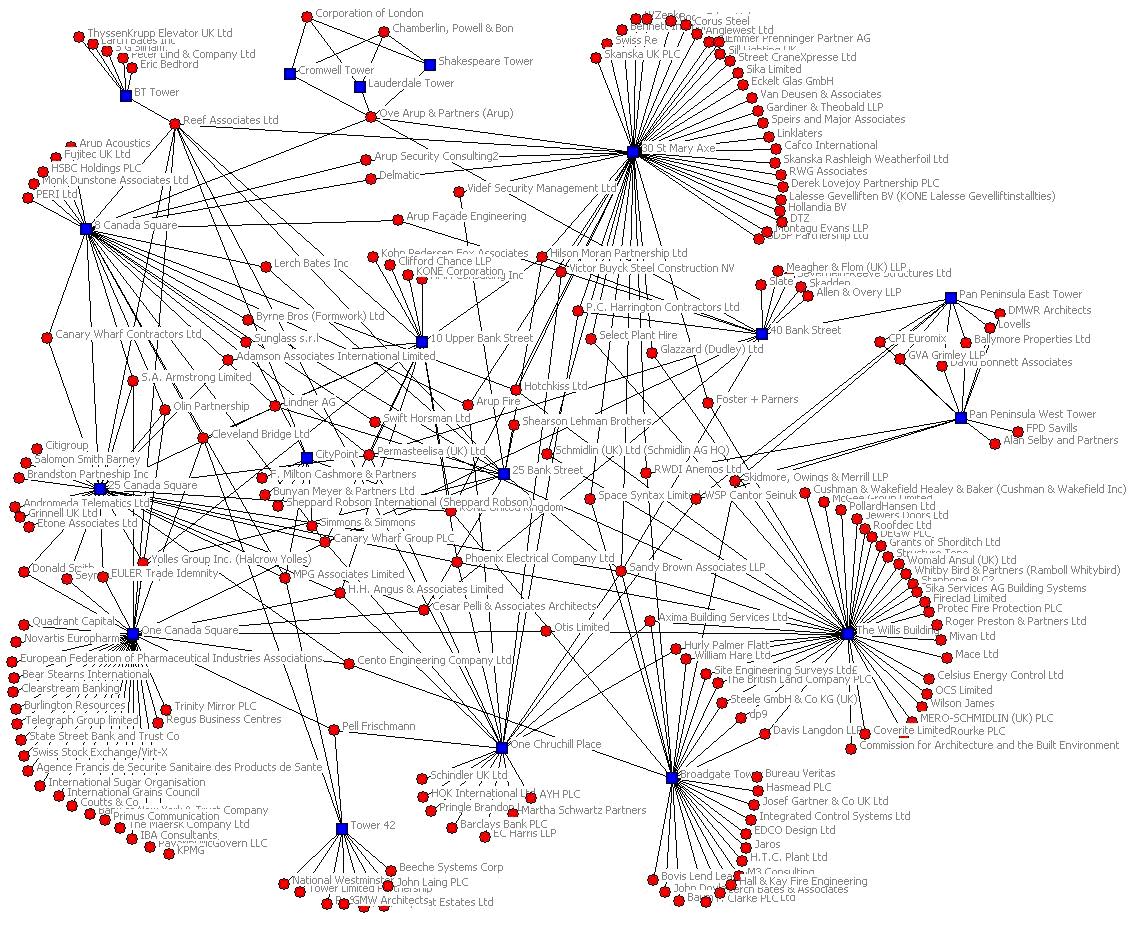
Neither is course content reducible to a few bullet points on a PowerPoint. Like people, knowledge is a multiplicity, connected to all else, and any boundary between this knowledge and that is, at best, an expedient fiction. As teachers, we must be most sensitive to the connections between knowledge and our students, recognizing that each connection is likely different, a multiplicity of connections. Each student is an assemblage of unique intellectual, emotional, social, sexual, religious, economic rhizomes that interconnects and interplays with the course content rhizome in its own unique way, and then that resulting assemblage interconnects more or less with all the other class assemblages, including the teacher's, to create a unique class assemblage that makes this ENG 1101 course different from any of my other ENG 1101 courses now, past, or future.

I don't know if reductionism is necessary for negotiating reality, but I'm sure it is a convenient habitual practice. The problem is that we forget that it is a fiction, a powerplay to gain physical, intellectual, political, social, religious, aesthetic control over reality, but it is not reality. Students are not students. They are so much more. Both teachers and students must be sensitive to the multiplicity of each other, even as we construct the fictions, the mantras, the formulas that help us through daily life.
This makes me think of the available spectrum of light. We see only a narrow bit of the total spectrum, but it is foolish of us to think that there is nothing else to see. What would we see of the world if we could process the total spectrum? Reductionists foolishly limit the rhizome just to what they can see; however, the rhizome, any rhizome, is infinitely rich, able to elevate and challenge our minds. The available light spectrum is, of course, sufficient to go to the grocery store or to take a test, but the spectrum is wide, even wider than we suspect. What could we see at wavelength -1?
We territorialize the rhizome, perhaps we must, but we must always be ready to follow the deterritorialization. As Deleuze and Guattari note: "It is not enough to say, 'Long live the multiple.' … The multiple must be made, not by always adding a higher dimension, but rather in the simplest of ways, by dint of sobriety, with the number of dimensions one already has available—always n - 1 (the only way the one belongs to the multiple: always subtracted). Subtract the unique from the multiplicity to be constituted; write at n - 1 dimensions. A system of this kind could be called a rhizome" (ATP, 6).

All students, all teachers, all systems of knowledge are bounded infinities, are assemblages of rhizomes. In classes, they are legion, infinity compounded infinitely. Writing teachers, then, must accept that any forms are provisional, expedient fictions to perform specific tasks within specific contexts. They are not eternal. The perceptive teacher must be open to the interplay of even the most formalized of structures with students. We must be able to follow the rhizome, "the line of flight or deterritorialization according to which [rhizomes] change in nature and connect with other multiplicities" (ATP, 9). That's where all the fun is.
BRB. LOL.
Tuesday, December 29, 2009
Writing the Rhizome Classroom
I spent the morning replying to emails from a colleague. He is concerned about the direction our writing across the curriculum program is taking, and I was trying to answer his concerns. This reminded me that I really must connect all this conversation about rhizomatic structures to the classroom, especially the writing classroom. The theory is fun, but if I cannot make it relevant to an actual classroom, then I must question the usefulness. So what would a classroom as rhizome look like or behave like, especially a writing classroom?
Let's start where Deleuze and Guattari start, with connectivity and heterogeneity. "Any point of a rhizome can be connected to anything other, and must be. This is very different from the tree or root, which plots a point, fixes an order" (ATP, 7). The principles of connectivity and heterogeneity totally overturn any form of hierarchical command and control structure which ranks, orders, fixes, and names all points within the hierarchy and which determines which points are inside the hierarchy and which are outside.
Actually, the rhizome does not overturn hierarchy. Rhizome does not contest or overpower hierarchy in any way; rather, it simply renders hierarchy irrelevant and flows around it. The rhizome Internet, for instance, treats any form of censorship as a fault which it isolates and flows around. The rhizome tree forms a knot around an infestation or a break and continues to grow around the offending wound. From a rhizomatic perspective, then, hierarchy is a wound which attempts to overpower the rhizome. The rhizome, in turn, is a force which attempts to isolate and flow around the wounds of the hierarchy.
Traditionally, a classroom is a hierarchical structure for impressing student minds with sanctioned, authoritative information and skills. The teacher sits at the top of the pyramid and brings all value to the class. The teacher represents the gatekeeper, determining who is in the class, within the hierarchy, and who is not. Especially at lower grades, the teacher censors the connectivity of students to anyone or anything other than the teacher and the teacher's information, thus violating the rhizomatic principle that any student of a rhizome class can be connected to anything other, and must be. (This certainly means that students must be able to connect to, be in conversation with, the other students in the class, and not only to the teacher, but it also means that students must be able to connect to anything other. Any point in a rhizome can connect not only to any other point in the rhizome but to anything other. In the universe.) The teacher signifies who is an A, who is a B, a C, a D, and an F student. The teacher determines which information, which behaviors, and which activities are valid and which are not. In the hierarchical class, the teacher represents all the power, ultimately of the State or the Academy, and the student is pressed into shape—is signified, named—by that Power.
A rhizomatic classroom is in/different, even when it adopts hierarchical structures for a time. In a rhizomatic classroom, the teacher is one point among others, not the only point with any power, sitting smugly, angrily, fearfully, or benignly at the top of the pyramid. The teacher is one learner among other learners. We hear this often today in the expression that we teachers should move from playing the sage on the stage to the guide on the side, a glib mnemonic that captures, as it also obscures, the shift from command-and-control power structures to connect-and-collaborate force structures. The teacher is one force among others. The teacher's information is one force among others. The teacher may carry greater force by dint of size, learning, and experience, but the students also carry forces from their own knowledge, skills, and experience, and they, too, exert force on each other and on the teacher as the teacher exerts force on them. They all become a rhizomatic solar system or galaxy, perhaps with some bodies exerting more or less gravitational force than others, but with all of them exerting some gravitational pull on all others, and even if remotely, on all other things in the universe. There is no rank order or fixed position in the rhizomatic classroom, though there can be a coherent dance and interplay. In the rhizomatic solar system, we planets find a trajectory and path because of the force of the Sun's gravitational pull, but the Sun finds its own trajectory and path, in part, because of our gravitational pull on it. And we all planets, moons, and Sun stay in our dance because of our gravitational pull each on all the others. Power, then, works in one direction in one way to create something dead, a dryzome. Force works in all directions in all ways to create something living and beautiful, a rhizome.
As a writing teacher, then, I may exert more force as a more experienced and capable writer (though I have been fortunate to have students whose writing force equaled or exceeded my own), but my colleagues/students also exert their own forces. My role is to engage those forces, dance with them, and intensify them before they spin out of my orbit to engage other forces.
My job is not to determine who/what is in the class and who/what is not. Indeed, our class blogs, wikis, chats, textings, aggregators, etc. have enabled more connections to more people, more languages, and more systems of knowledge than we have wit to comprehend. We connect to any person, any topic, any knowledge, any language that we can engage.
My job is not to signify and rank order students. Rather, my job is to help them determine what forces (what assemblages that they muster together in written language, what texts) work well among other forces (audiences and texts and knowledge assemblages) and what texts do not work well. Why POS works so well in this text among these other texts and readers and yet does not work so well in this text with these readers. LOL.
My job is not to censure or sanction knowledge, but to explore knowledge and to develop an eye for what works well and what doesn't, what plays well and what plays less well and for whom. LOL.
My task is to facilitate a beautiful dance in written language, to "write, form a rhizome, increase your territory by deterritorialization" (ATP, 11). As Deleuze and Guattari say: "We're tired of trees. We should stop believing in trees, roots, and radicles [hierarchies]. They've made us suffer too much. All of arborescent culture is founded on them, from biology to linguistics. Nothing is beautiful or loving or political aside from underground stems and aerial roots, adventitious growths and rhizomes" (ATP, 15). I have no State power to appeal to, no State regime of knowledge to pass along, no authoritative and blessed mother tongue. Writing always works through collective assemblages of enunciation. "There is no language in itself, nor are there any linguistic universals, only a throng of dialects, patois, slangs, and specialized languages. There is no ideal speaker-listener, any more than there is a homogeneous linguistic community" (ATP, 7).
BRB
Let's start where Deleuze and Guattari start, with connectivity and heterogeneity. "Any point of a rhizome can be connected to anything other, and must be. This is very different from the tree or root, which plots a point, fixes an order" (ATP, 7). The principles of connectivity and heterogeneity totally overturn any form of hierarchical command and control structure which ranks, orders, fixes, and names all points within the hierarchy and which determines which points are inside the hierarchy and which are outside.
Actually, the rhizome does not overturn hierarchy. Rhizome does not contest or overpower hierarchy in any way; rather, it simply renders hierarchy irrelevant and flows around it. The rhizome Internet, for instance, treats any form of censorship as a fault which it isolates and flows around. The rhizome tree forms a knot around an infestation or a break and continues to grow around the offending wound. From a rhizomatic perspective, then, hierarchy is a wound which attempts to overpower the rhizome. The rhizome, in turn, is a force which attempts to isolate and flow around the wounds of the hierarchy.
Traditionally, a classroom is a hierarchical structure for impressing student minds with sanctioned, authoritative information and skills. The teacher sits at the top of the pyramid and brings all value to the class. The teacher represents the gatekeeper, determining who is in the class, within the hierarchy, and who is not. Especially at lower grades, the teacher censors the connectivity of students to anyone or anything other than the teacher and the teacher's information, thus violating the rhizomatic principle that any student of a rhizome class can be connected to anything other, and must be. (This certainly means that students must be able to connect to, be in conversation with, the other students in the class, and not only to the teacher, but it also means that students must be able to connect to anything other. Any point in a rhizome can connect not only to any other point in the rhizome but to anything other. In the universe.) The teacher signifies who is an A, who is a B, a C, a D, and an F student. The teacher determines which information, which behaviors, and which activities are valid and which are not. In the hierarchical class, the teacher represents all the power, ultimately of the State or the Academy, and the student is pressed into shape—is signified, named—by that Power.
A rhizomatic classroom is in/different, even when it adopts hierarchical structures for a time. In a rhizomatic classroom, the teacher is one point among others, not the only point with any power, sitting smugly, angrily, fearfully, or benignly at the top of the pyramid. The teacher is one learner among other learners. We hear this often today in the expression that we teachers should move from playing the sage on the stage to the guide on the side, a glib mnemonic that captures, as it also obscures, the shift from command-and-control power structures to connect-and-collaborate force structures. The teacher is one force among others. The teacher's information is one force among others. The teacher may carry greater force by dint of size, learning, and experience, but the students also carry forces from their own knowledge, skills, and experience, and they, too, exert force on each other and on the teacher as the teacher exerts force on them. They all become a rhizomatic solar system or galaxy, perhaps with some bodies exerting more or less gravitational force than others, but with all of them exerting some gravitational pull on all others, and even if remotely, on all other things in the universe. There is no rank order or fixed position in the rhizomatic classroom, though there can be a coherent dance and interplay. In the rhizomatic solar system, we planets find a trajectory and path because of the force of the Sun's gravitational pull, but the Sun finds its own trajectory and path, in part, because of our gravitational pull on it. And we all planets, moons, and Sun stay in our dance because of our gravitational pull each on all the others. Power, then, works in one direction in one way to create something dead, a dryzome. Force works in all directions in all ways to create something living and beautiful, a rhizome.
As a writing teacher, then, I may exert more force as a more experienced and capable writer (though I have been fortunate to have students whose writing force equaled or exceeded my own), but my colleagues/students also exert their own forces. My role is to engage those forces, dance with them, and intensify them before they spin out of my orbit to engage other forces.
My job is not to determine who/what is in the class and who/what is not. Indeed, our class blogs, wikis, chats, textings, aggregators, etc. have enabled more connections to more people, more languages, and more systems of knowledge than we have wit to comprehend. We connect to any person, any topic, any knowledge, any language that we can engage.
My job is not to signify and rank order students. Rather, my job is to help them determine what forces (what assemblages that they muster together in written language, what texts) work well among other forces (audiences and texts and knowledge assemblages) and what texts do not work well. Why POS works so well in this text among these other texts and readers and yet does not work so well in this text with these readers. LOL.
My job is not to censure or sanction knowledge, but to explore knowledge and to develop an eye for what works well and what doesn't, what plays well and what plays less well and for whom. LOL.
My task is to facilitate a beautiful dance in written language, to "write, form a rhizome, increase your territory by deterritorialization" (ATP, 11). As Deleuze and Guattari say: "We're tired of trees. We should stop believing in trees, roots, and radicles [hierarchies]. They've made us suffer too much. All of arborescent culture is founded on them, from biology to linguistics. Nothing is beautiful or loving or political aside from underground stems and aerial roots, adventitious growths and rhizomes" (ATP, 15). I have no State power to appeal to, no State regime of knowledge to pass along, no authoritative and blessed mother tongue. Writing always works through collective assemblages of enunciation. "There is no language in itself, nor are there any linguistic universals, only a throng of dialects, patois, slangs, and specialized languages. There is no ideal speaker-listener, any more than there is a homogeneous linguistic community" (ATP, 7).
BRB
Wednesday, December 23, 2009
The Function of Writing
Our interest in writing should be on what it does rather than what it means, the physical rather than the spiritual: "As an assemblage, a book has only itself, in connection with other assemblages and in relation to other bodies without organs. We will never ask what a book means, as signified or signifier; we will not look for anything to understand in it. We will ask what it functions with, in connection with what other things it does or does not transmit intensities, in which other multiplicities its own are inserted and metamorphosed, and with what bodies without organs it makes its own converge" (4). This is the point at which writing connects with both play and work. Both play and work are doing something, usually with others. Thus, we cease to look at writing as an artifact to be examined and deconstructed or as an expression of an individual mind to be understood or as a reflection of the world to be interpreted; rather, writing is an assemblage of energy and force arising out of other assemblages of energy and force and interacting with yet other assemblages of energy and force. It is the interaction of those assemblages, the interplay or inter-work done by the writing, that should interest us. We should ask what other assemblages of writing this writing interplays with, how it acts upon those assemblages and is, in turn, acted upon by them: what assemblages of commerce, thought, government, religion, or society this writing interplays with and how it acts upon those assemblages and how it is, in turn, acted upon by them. As an assemblage of energy, writing is a billiard ball of approximate size and shape struck by a cue of approximate size and shape with approximate force in an approximate direction on an approximate table of approximate size, shape, density, and level amongst other balls of approximate size, density, and shape in an approximate arrangement. Our interest is to watch the progress of the ball, how it strikes the rails and other balls, how it paces along, strikes, sheers, veers, and rolls, how it rearranges the table in its progress.
Now imagine an infinitely large table curving away forever with balls rolling in and out as they are struck by other cues with lesser or greater force and as the table curves, drops, and sheers this way or that, and then imagine a multi-dimensional table, or plane, or field, with balls of different size and intensities, weight, gravitational pull, and illumination, extending in bounded infinity, out through interstellar space or inside your head, and you begin—or at least, I begin—to capture a sense of an essay, a story, a novel, a book as a rhizome stretching, pulling, pushing, merging, sheering its way through other systems of energy in a marvelous dance of light. "This little light of mine, I'm gonna let it shine," but only amongst all the other lights, building intensity, fading, interplaying, a dance of lights.
This note is my little light. It arises from the light of A Thousand Plateaus by Gilles Deleuze and Félix Guattari, specifically from the first chapter, "Introduction: Rhizome," of that book. It also arises from my own education, my own reading, the history of the United States, my marriage, my two sons, my vacation in the Bahamas where it is written, my impatience with the people waiting to go to the beach, my own practice of writing, my knowledge of note-taking and essays, and from infinitely more assemblages; and even now, as merely a faint light that serves only to illuminate my own thinking about writing and rhizomes, the level of this note's interplay, its intensity, is almost more complex than I can imagine as it careens and arcs through the rhizome of my own mind, striking chords with other assemblages of ideas, desires, emotions, plans, intentions, images, and doggerel. God forbid that I should put this on my blog and that others should read it, or that I should incorporate some of these thoughts in a presentation that I may make in Feb, 2010, at the Southern Humanities Conference in Asheville, NC. Who knows what weird scenes inside the gold mine may emerge if it should strike a chord, elevate an intensity, in the writing or thought or presentation of some other. Who can tell what bits of 2009, Christmas-time Bahamas may emerge in the cold hills of North Carolina by way of 1980s France. This single quark emerging from a collider cloud is already leaving traces of its path, and while it is most likely to lose its singular identity and traceability in some other writing or presentation, it is now emerged and is now in interplay with other systems, other assemblages. At present, it is just a note in TextEdit on my MacBook Pro laptop, but soon—or so I intend—a post to my blog, when I can reconnect to the Net. I can infuse, for more reasons than I have wit or clarity to enumerate, more energy into this little light of mine to see where it goes. Or not.
My interest in this bit of writing is its effects, what it does, with how well it plays or works, with whether or not it builds in intensity or is subsumed into some other assemblage of thought, or writing, or presentation, or blog, or glass of wine, or day on the beach. Have I struck it well? Does it have impulse and energy, a promising trajectory? Is it likely to go somewhere, to resonate, intensify? And, anticipating North Carolina, is this writing, this note, play or work? It feels like play just now, and I'm most interested in seeing how well it plays, or works, with other ideas I'm forming about rhizomes and writing, but is this just quibbling? Is it not work? I'm vacationing in the Bahamas, so some of the people here—my family, a sheer force against me (next to, not necessarily opposed to, but perhaps that, too)—think I am working and definitely not playing. They are waiting for me—a different assemblage with different energy decidedly disinterested in French philosophy and obscure plant reproduction—but they won't wait for long. I can feel their energy even as the force of Deleuze and Guattari is fading. What a strange thing writing is. I think I'll go to the beach for now.
But later, I'll have to think/write more about the distinctions between play and work. This note is both, but what does that mean? Deleuze and Guattari say not to ask that question of a text, do not ask what it means. So what is the function? What does it do? Will this note function differently as work than as play? That's promising.
Footnote at time of posting: As it turns out, I didn't make it to the beach, but what the hell! I'm in the Bahamas and life is wonderful.
Now imagine an infinitely large table curving away forever with balls rolling in and out as they are struck by other cues with lesser or greater force and as the table curves, drops, and sheers this way or that, and then imagine a multi-dimensional table, or plane, or field, with balls of different size and intensities, weight, gravitational pull, and illumination, extending in bounded infinity, out through interstellar space or inside your head, and you begin—or at least, I begin—to capture a sense of an essay, a story, a novel, a book as a rhizome stretching, pulling, pushing, merging, sheering its way through other systems of energy in a marvelous dance of light. "This little light of mine, I'm gonna let it shine," but only amongst all the other lights, building intensity, fading, interplaying, a dance of lights.
This note is my little light. It arises from the light of A Thousand Plateaus by Gilles Deleuze and Félix Guattari, specifically from the first chapter, "Introduction: Rhizome," of that book. It also arises from my own education, my own reading, the history of the United States, my marriage, my two sons, my vacation in the Bahamas where it is written, my impatience with the people waiting to go to the beach, my own practice of writing, my knowledge of note-taking and essays, and from infinitely more assemblages; and even now, as merely a faint light that serves only to illuminate my own thinking about writing and rhizomes, the level of this note's interplay, its intensity, is almost more complex than I can imagine as it careens and arcs through the rhizome of my own mind, striking chords with other assemblages of ideas, desires, emotions, plans, intentions, images, and doggerel. God forbid that I should put this on my blog and that others should read it, or that I should incorporate some of these thoughts in a presentation that I may make in Feb, 2010, at the Southern Humanities Conference in Asheville, NC. Who knows what weird scenes inside the gold mine may emerge if it should strike a chord, elevate an intensity, in the writing or thought or presentation of some other. Who can tell what bits of 2009, Christmas-time Bahamas may emerge in the cold hills of North Carolina by way of 1980s France. This single quark emerging from a collider cloud is already leaving traces of its path, and while it is most likely to lose its singular identity and traceability in some other writing or presentation, it is now emerged and is now in interplay with other systems, other assemblages. At present, it is just a note in TextEdit on my MacBook Pro laptop, but soon—or so I intend—a post to my blog, when I can reconnect to the Net. I can infuse, for more reasons than I have wit or clarity to enumerate, more energy into this little light of mine to see where it goes. Or not.
My interest in this bit of writing is its effects, what it does, with how well it plays or works, with whether or not it builds in intensity or is subsumed into some other assemblage of thought, or writing, or presentation, or blog, or glass of wine, or day on the beach. Have I struck it well? Does it have impulse and energy, a promising trajectory? Is it likely to go somewhere, to resonate, intensify? And, anticipating North Carolina, is this writing, this note, play or work? It feels like play just now, and I'm most interested in seeing how well it plays, or works, with other ideas I'm forming about rhizomes and writing, but is this just quibbling? Is it not work? I'm vacationing in the Bahamas, so some of the people here—my family, a sheer force against me (next to, not necessarily opposed to, but perhaps that, too)—think I am working and definitely not playing. They are waiting for me—a different assemblage with different energy decidedly disinterested in French philosophy and obscure plant reproduction—but they won't wait for long. I can feel their energy even as the force of Deleuze and Guattari is fading. What a strange thing writing is. I think I'll go to the beach for now.
But later, I'll have to think/write more about the distinctions between play and work. This note is both, but what does that mean? Deleuze and Guattari say not to ask that question of a text, do not ask what it means. So what is the function? What does it do? Will this note function differently as work than as play? That's promising.
Footnote at time of posting: As it turns out, I didn't make it to the beach, but what the hell! I'm in the Bahamas and life is wonderful.
Subscribe to:
Posts (Atom)